
Streaming as infrastructure
Signed media access, byte-range responses, duration accuracy, and URL refresh behavior were treated as one playback contract across storage, API, and mobile.
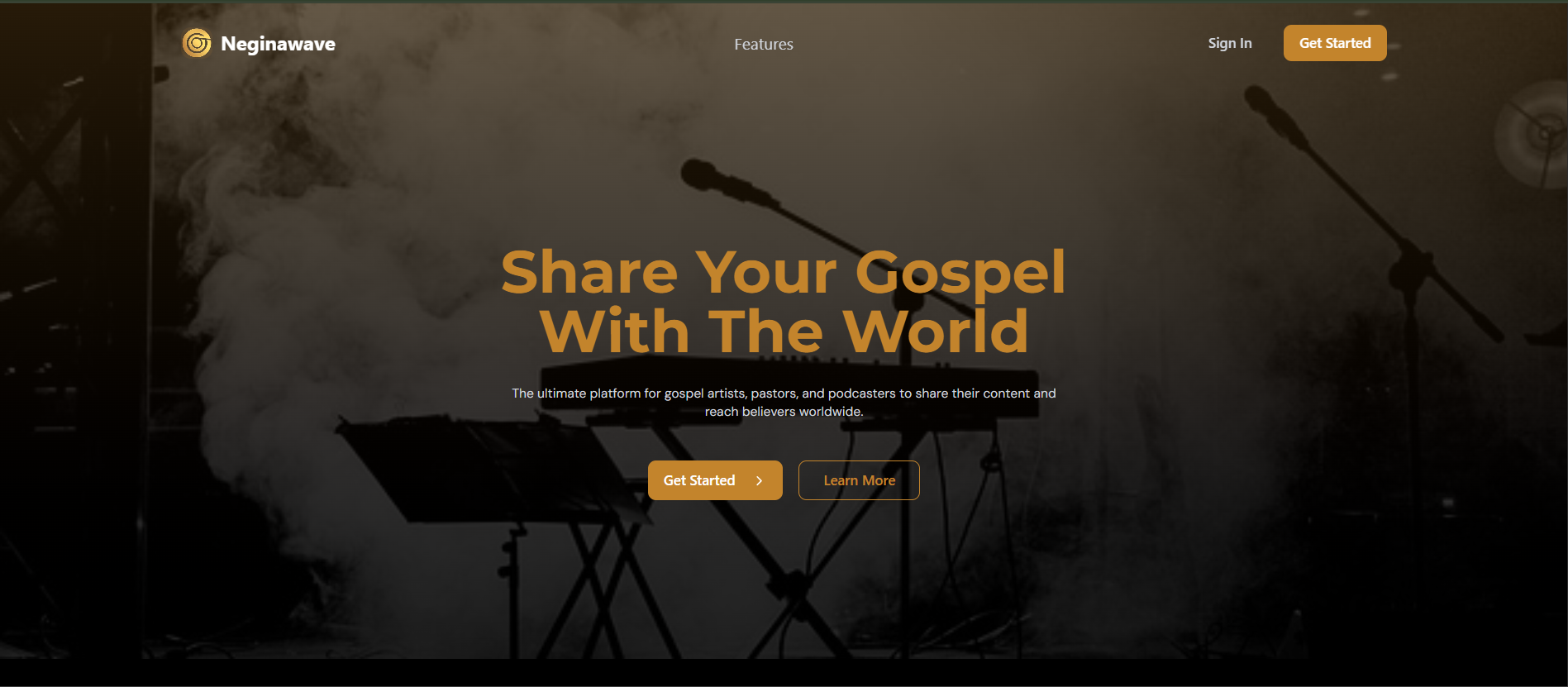
A gospel-media platform recovered across every product surface
Overview
Fullstack Developer · Contract
August—September 2026
Remote · Nigeria
Prepared the backend for production on Railway with validated configuration, Resend, SendGrid and SES email providers, Paystack verification, and S3-compatible storage.
Hardened signup, password recovery, email normalization, account deletion, and premium-status synchronization across platforms.
Built secure media delivery with signed URLs, byte-range streaming, format validation, accurate durations, and large-file upload support.
Upgraded the mobile application to Expo SDK 54, configured EAS builds, and fixed native playback, signed-URL refresh, and overlapping-audio failures.
Implemented deep links and shareable smart links with Apple and Android association files and branded Open Graph previews.
Completed the creator portal, administrator console, moderation workflows, catalog discovery, support tooling, premium management, and listen-session analytics.
The conditions that shaped the system.
The product’s failures crossed application boundaries. A playback issue could involve the Expo client, expiring signed storage access, HTTP range behavior, media validation, or backend authorization. At the same time, incomplete creator and admin tools blocked publishing, moderation, payments, analytics, and catalog growth.
How the build was organised.
Made the Railway backend production-ready with environment validation, provider-independent email delivery, Paystack verification, S3-compatible storage, and stronger authentication and account lifecycle handling.
Built secure streaming around signed URLs, byte-range requests, upload validation, duration calculation, and large-file support, then stabilised native playback after upgrading the mobile app to Expo SDK 54.
Completed the creator portal, administrator console, public web experience, smart links, catalog features, moderation flows, and analytics as one coordinated platform recovery.
Signed media access, byte-range responses, duration accuracy, and URL refresh behavior were treated as one playback contract across storage, API, and mobile.
Smart links connect public sharing, mobile deep links, app association, and branded previews for music, sermons, podcasts, and playlists.
Changes were traced through clients, APIs, storage, payments, deployment, and administration so fixes held across the whole platform.
A little portfolio magic
Hi, I’m Orko—Evans’ assistant. Ask me about Evans, his work, or the systems he builds, and I’ll cast a little spell to find the answer.